
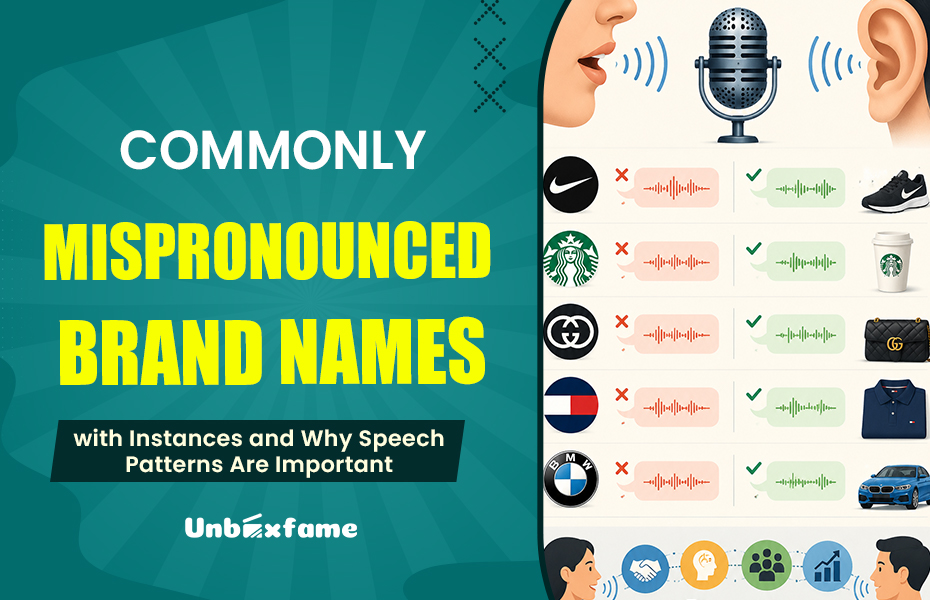
Outlived a situation when you are super confused and keep wondering about the spelling and thoughts behind the brand name. Maybe you’ve said it all along incorrectly! Thou wast not told, nor was there anyone to hear. Some peculiarities of brand name pronunciation. It’s right in front of you, but a name is mispronounced on a conference call. Then you overthink and realize that after speaking the same name so many times, you made a mistake while speaking it in front of the client. Don’t worry, this speech pattern happens a lot of times as the human mind becomes nervous sometimes.
Let’s think deeper and understand the root cause of why some names flow more smoothly than others. Some block people and invite them to give their thoughts. The solution lies somewhere in between linguistics and brand strategy.
Finding the root cause of why some brand names are difficult to pronounce?
The root cause is confusing speech patterns and confusing spelling, as well as the language the name is derived from. Brand names that are derived from Latin, Spanish, French, German, or Japanese use sounds that are not familiar to a common audience, as they contain tricky alterations and spellings.
Difficult names are chosen on purpose by some of the founders. A unique tone can correspond to a high-end or purposeful sound. On the other hand, sometimes, it’s all about the matter of words and letters.
The name isn’t known, but the brand is.
Pochse is also known as “Porsh. The correct speech pattern is closer to “Por-shuh”, derived and inspired by the German pronunciation. Informally, Nike is shortened to “Nyke”, but it has two syllables.
Even the savviest of shoppers get stymied by Givenchy. It has a French rhythm which is not familiar to the English ear.
Not so with Hyundai. The words are not necessarily the same from one market to another; they are subject to change but are not static worldwide. The list is completed by Xiaomi, Ikea and Balenciaga. They all make the same argument. The logo could be “just not right” while the name is “just right. It’s just the essence of the brand name pronunciation that is cross-category.
Why Pronunciation Quietly Shapes a Brand
This is the point where it becomes Trivia and Strategy.
If somebody can confidently say a name, then they say it more frequently. That is something that’s going to bring more word-of-mouth marketing than most of the founders will realize.
Pronunciation is also important to brand perception. Names that are easy to pronounce are welcoming. Even if you have a wonderful product, a hard to get used to name can subtly build a barrier. There is also a search problem! The difficulties in searching for the brand online are increased when someone hears its name but can’t spell it. Often, poor pronunciation leads to poor brand recall.
The Mouth-Spell Myth of Brand Names
Some favourite brands are among those that took the time to get their names out to the world. The aim of simplicity is not simplicity. The objective is not to have any meaning. When people can say this, remember it, and repeat it without problems, it can be complex. Interest is created by bizarre names. Easy names give solace. These two strategies are not necessarily evil.
The best brand names are typically in the middle. They remain “sticky” and easy to learn.
How quickly can you write the name of a brand?
Display your brand identity to someone for 5 seconds. Then ask some rapid-fire questions.
What would be their pronunciation? What are their expectations of the brand? Which personality is indicated by the name? Do they recall it? Can they spell it?
If the name persists in failing to hit the mark, it’s time to give it another reading before launching.
Test a brand name before its roll-out.
Now is the time for the founders to actually take action on all this. Say the name slowly, out loud to yourself. Take opinions from your family members, friends, and close relatives to read the name without giving any proper explanation to them. Observe what happens after that. Are they able to say it straight off? Are they able to write it correctly after hearing it?
After an hour, advise them to pronounce the name again without looking at it. This one test provides a greater picture of brand awareness than most surveys. If you have an international audience, give the name with different accents a try. In certain cities, some sounds are considered to be normal that are not in others, such as in Delhi. Finally, check the meaning. Names can literally be misinterpreted across the entire globe, and most start-ups don’t bother to check.
Get Your Perfect Brand Identity Today
If it needs pronunciation every time it’s introduced, it’s working against the brand. A good brand name shouldn’t cause you a headache. Naming is never considered an afterthought at Unboxfame. All identities must pass brand strategy thinking, as they must be memorable, pronounceable, and fit into every culture in every market.
“If people hesitate to say your brand name out loud, there’s a message in that.” That means they have to rethink and discover the importance of your brand so that people can dive deeper and know why the name works, what’s the strategy behind it, and what’s the naming science behind it. A name that people can say confidently is a name that they will repeat. That repetition, ultimately, is the start of true brand recognition.